

Why Live Music Feels Different: The Science of Listening Together
On the lawn at Bellforge Arts Center, music becomes a collective experience shaped by audience, artist, and place.
Music has become something we carry with us. It lives in our headphones, follows us through errands and routines, and meets us in private moments. We build quiet relationships with songs this way, often returning to them for comfort or release. But live music offers something different. At a live performance, especially in a shared outdoor setting like Bellforge Arts Center, music becomes a collective experience. It unfolds in real time, shaped by the people around us, deepening emotional connection and creating a sense of community that recorded music can’t fully replicate.
Recent research has begun to give language to this. A study from the University of Zurich found that live music activates the emotional centers of the brain more strongly than recorded music. A live performance was shown to engage broader communication in the amygdala and produce a more active exchange of information across affective and cognitive regions of the brain. In other words, the brain is genuinely experiencing more intense emotional processing when hearing music live.
The most meaningful shift, though, isn’t only in the intensity of the response. It’s in how that response begins to take shape between people.
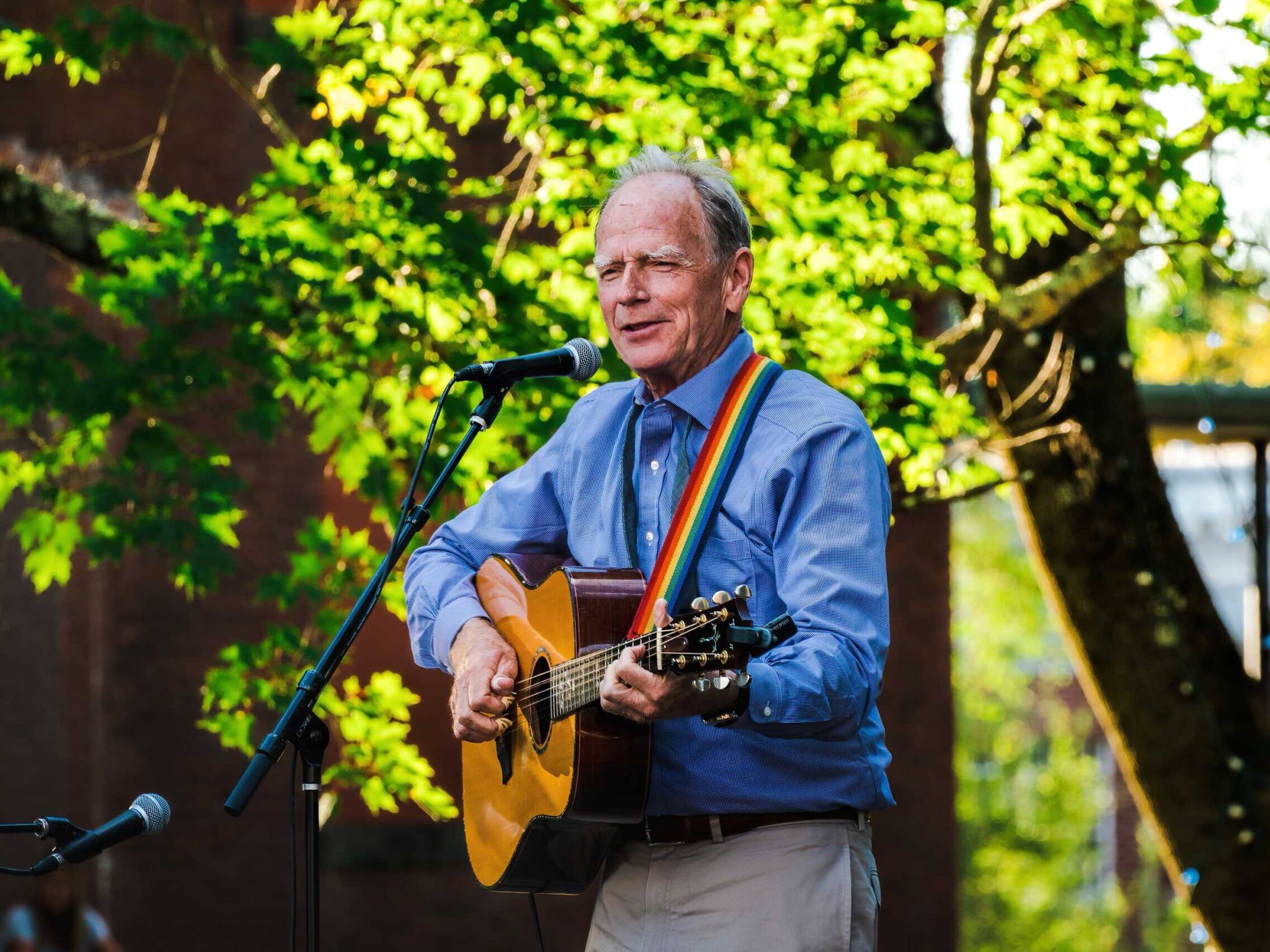
Photo: Livingston Taylor at Bellforge Arts Center.
In the study, a pianist adjusted their performance in real time, responding to the audience’s reactions as they played. The listeners, in turn, showed signs of synchronizing, both with the music and with their own emotional responses. A kind of dynamic alignment began to take hold across the room.
“In a live performance, it's a collaboration with the audience; you ride the ebb and flow of the crowd's energy.”
— Jon Batiste
It points to something many of us have experienced ourselves: that live music is not simply delivered from artist to audience in a neat, static one-way transaction. Instead, a more fluid relationship emerges — between performer and listener, as they influence one another, and among the audience as well.
Patrick Whelan, a Harvard Medical School instructor who teaches the course Music and the Mind, describes it this way: “…music takes over the mental faculties of all the people who are attending. It puts everyone in the same emotional space.”
In a communal listening environment, music gathers attention into one place. The experience is no longer entirely individual, but something shared and universal. A room begins to respond together, listening, reacting, adjusting in real time.
There are even theories that this responsiveness runs deeper than we tend to think. Long before music became something we performed or attended, early mammals relied on sound to understand their surroundings, developing a sensitivity to shifts in tone, rhythm, and pattern. That underlying attentiveness hasn’t disappeared. It’s still with us.
In a performance setting, the brain is scanning, sorting, and responding to a complex field of sound. But the outcome is no longer survival. It’s connection. And in an increasingly disconnected world, we need more ways to remember the thread that runs between us.
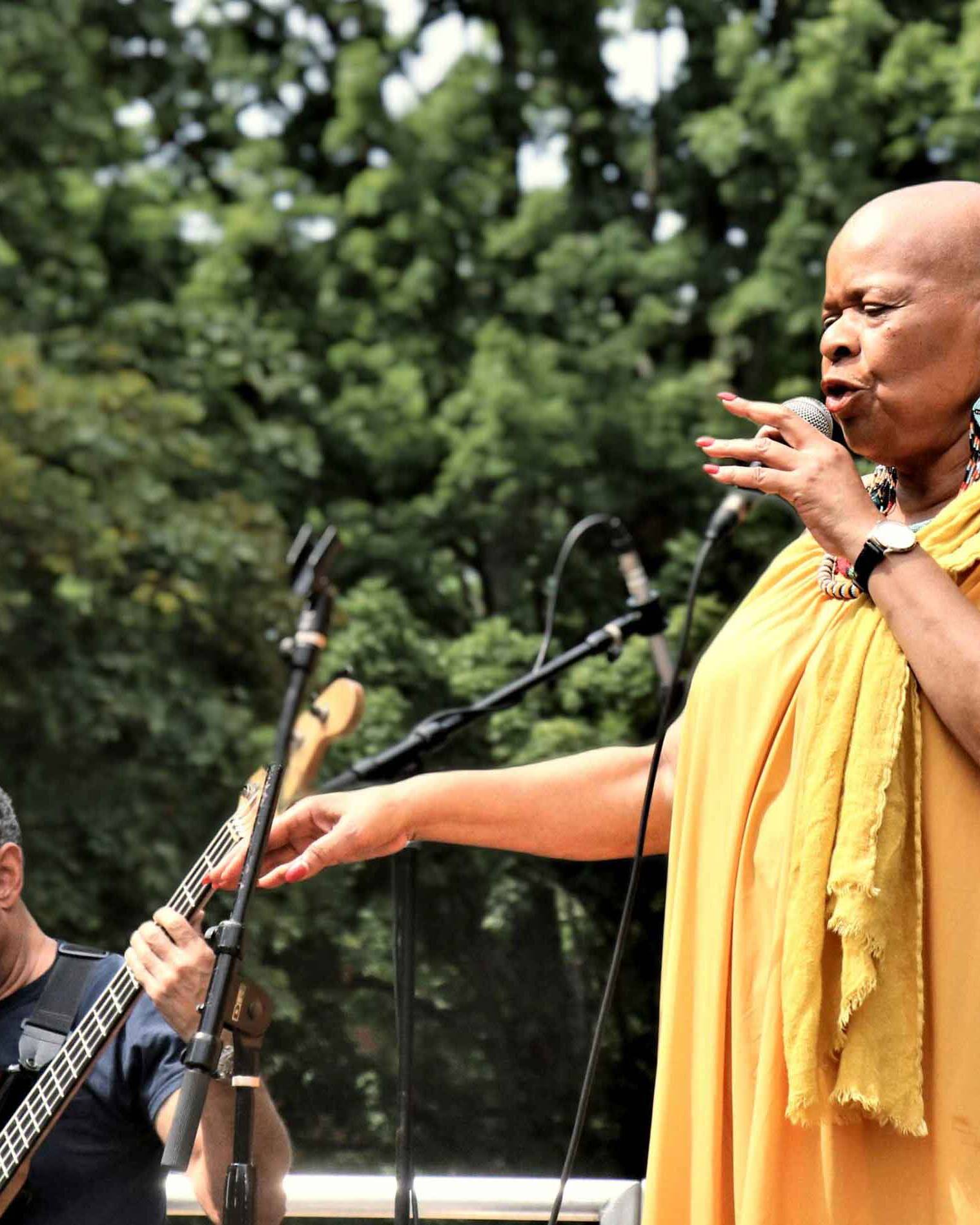
Photo: Valerie Stephens performing at Bellforge Arts Center.
At Bellforge, that impulse sits at the center of what we’re building. We think of art not simply as something to experience, but as a way of returning to ourselves and each other, more fully. Live performance becomes one of the clearest expressions of that idea.
What a performance offers is not fixed, but something evolving as the energy of the audience and their emotions come to light. This responsiveness is part of what gives an event its texture: deeply human, malleable, and alive in a way that can’t be replicated.
This vividness becomes most visible outdoors. Music carries differently on our lawn. It moves through open air, meets the edges of trees, dissolves and gathers again. There isn’t the same separation between performer and audience that one might find in a more formal setting. People settle in in their own ways – on blankets, in chairs, directly on the grass – finding their own vantage point, their own way of leaning in, and being present to the experience.
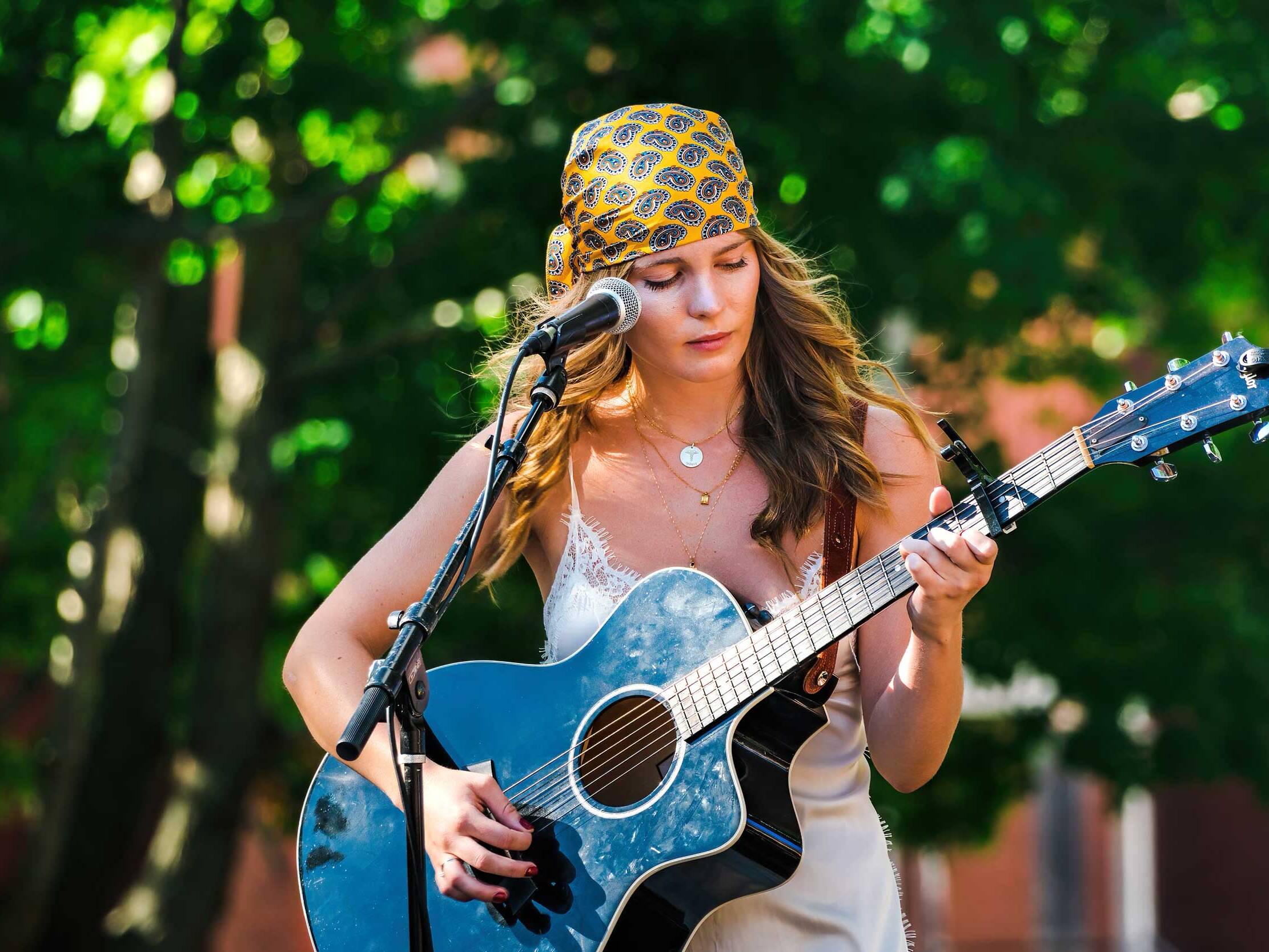
Photo: Jordan Armstrong at Bellforge Arts Center.
And in that presence, a temporary relationship takes hold. Musicians adjust in real time, holding a phrase a moment longer, shifting tempo, introducing something unplanned, all while the grounds respond alongside them. Live music becomes the gateway to collective attention. A kind of noticing that moves through the group. The subtle awareness that this version of the music, shaped by this particular gathering of people, won’t happen again in quite the same way.
For all the ways technology has expanded access to music, there is still something we return to that can’t be replicated through speakers or screens. Not because it is better in a competitive sense, but because it is different in kind.
“With so many ways to communicate at our disposal, we must not forget the transformative power of a live music experience and genuine human exchange.”
— Jon Batiste
Live music brings us back to our bodies and to the moment. To Bellforge, music has always been more than sound. It has been a way of gathering, of responding, of processing, of remembering, and of feeling. It cultivates a sense, however brief, of being part of something larger than ourselves.
As we move into the spring season, this is part of what we’re holding onto. The idea that what happens on the lawn isn’t just a series of performances, but a series of encounters. Each artist brings something, and each audience does too.
If you’ve been listening on your own throughout the winter, this is an invitation to step back into that collective experience. To notice what changes when music isn’t just played in the background, but emerges in real time, pulling at our attention, and reminding us of our beating hearts.
“Music brings a warm glow to my vision, thawing mind and muscle from their endless wintering.”
— Haruki Murakami
We hope you’ll thaw from the endless wintering with us. Explore the full lineup on our events page and see what’s calling to you.