

Beyond Home and Work: The Power of Third Places
How thoughtful spaces can help rebuild connection.
Recently, an essay about the growing epidemic of loneliness in America began circulating among our team. It sparked one of those conversations that kept emerging well beyond the initial moment – the kind that reshapes how we think about the work we’re doing and why it matters. The piece traced a connection between rising isolation and the continual disappearance of real-life gathering spaces. These informal, communal environments are what sociologist Ray Oldenburg once described as “third places” in his book The Great Good Place.
Third spaces are what exist beyond home (first space) and work (second place). The coffee shop where you begin to recognize the regulars, the park where conversations start without introduction, and the library that offers both solitude and shared quiet. For decades, places like these have served as anchors of community life. They are where familiarity builds through repetition, where small interactions accumulate into connection, where we experience ourselves as part of something larger than our own routines.
And yet many of these spaces have been thinning out or transforming in ways that make lingering harder. Longer work hours, digital substitution, the slow hollowing-out of downtowns, and the expectation that nearly every environment justify itself through transactions have reshaped how – and whether – we gather.
Loneliness, once spoken about privately, is now measurable across generations. Young adults report unprecedented levels of isolation despite being constantly connected online. Older adults face serious health risks linked to social disconnection. When gathering places fade, something subtle but essential begins to fray.
A neighborhood without shared environments isn’t simply quieter; it becomes more fragmented, less resilient, less alive.
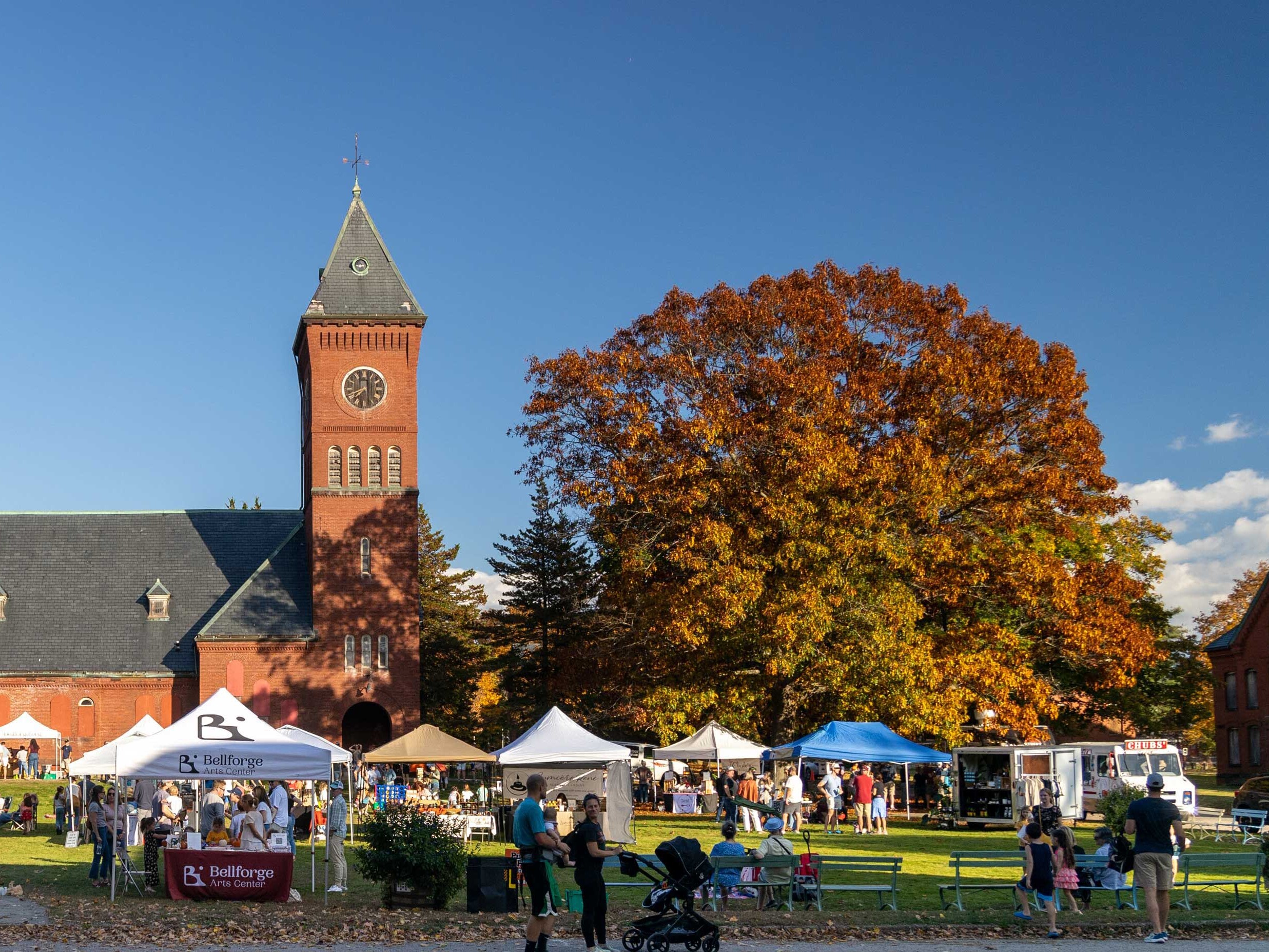
Photo: Bellforge Arts Center in Fall.
Our conversation began to move beyond preservation and toward intention. It is one thing to recognize the importance of sacred third spaces. It is another to think carefully about how they are created and supported in the first place.
What does it mean to cultivate not just space, but a sense of place?
There is a meaningful difference between the two. A space is physical; a place is relational. A space can be entered and exited without much consequence. A place, over time, begins to shape us. It forms through repetition and shared memory. It carries an atmosphere. It absorbs the presence of those who return to it. Place is not static architecture; it is a living exchange between environment and community.
Seen this way, creating places where people can gather, linger, and return to one another becomes an act of care. In a culture defined by speed and productivity, environments that encourage congregation, shared interests, creativity, and access to nature offer something deeply restorative. They allow us to step out of the roles that dominate our daily lives and into a more expansive sense of participation.
This way of thinking has deeply informed how we imagine Bellforge. While we are, of course, an arts center – presenting concerts, workshops, community programming – the deeper question guiding us is not simply what we host, but what kind of place we are shaping.
Can someone arrive without needing to perform or purchase? Can they wander the grounds, sit beneath trees, or encounter beauty without agenda? Can they return again and again and begin to feel a sense of familiarity? Can they find themselves in conversation with neighbors, artists, students, and strangers who become something less strange over time?
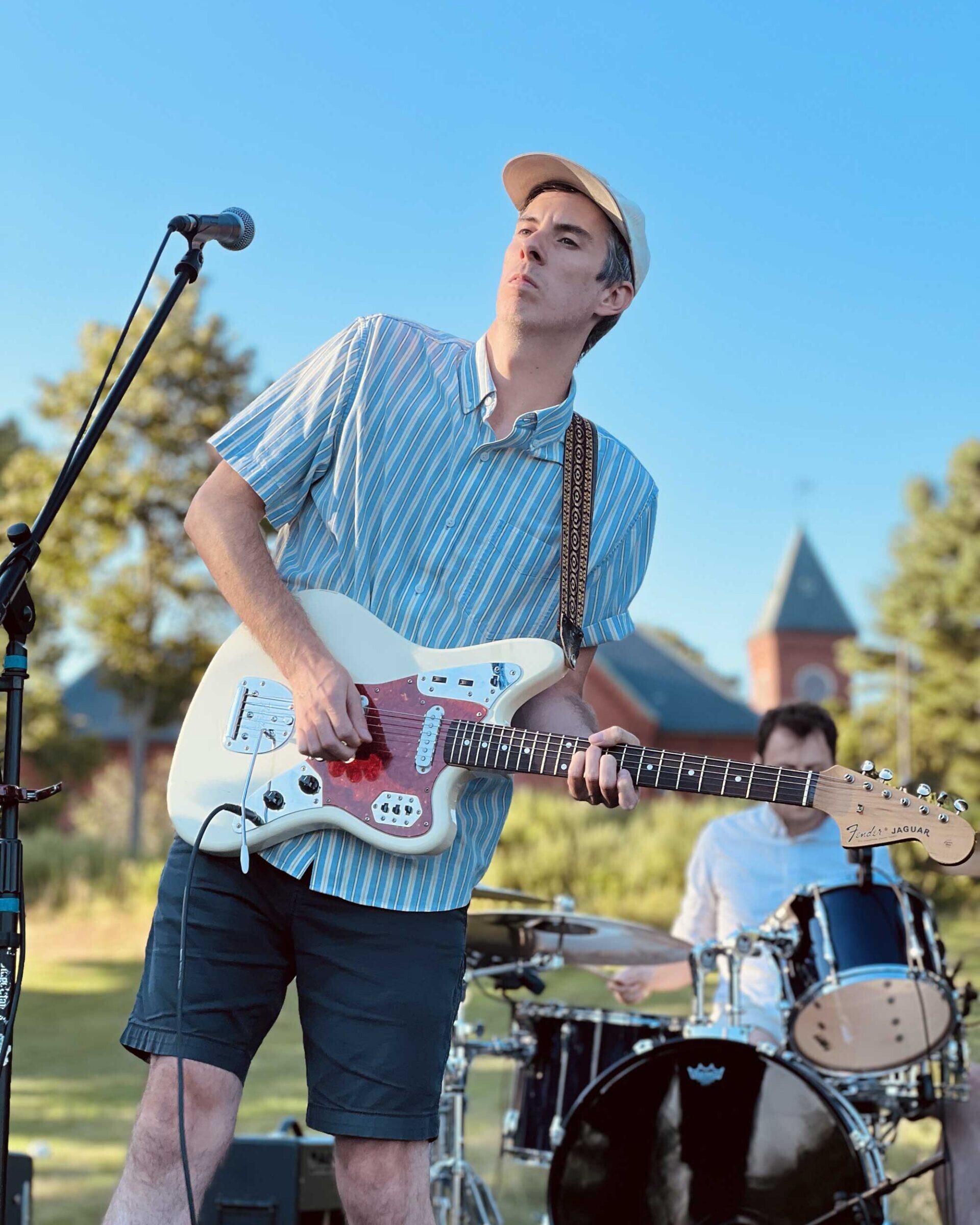
Photo: Lost Film performing at Bellforge’s Summer Sounds series in 2025.
Public parks have endured as powerful third places in part because of their openness. They ask very little of those who enter them. No purchase, no membership, no particular role to perform. They allow both solitude and connection. They welcome movement and stillness. In many communities, they function as essential public health infrastructure as much as recreational amenities. We believe creative spaces, when thoughtfully designed, can operate in a similar way.
When built with care, they become more than venues for entertainment. They become environments for participation, witnessing, and shared experience. A concert can simply be music, but it can also be a room full of people collectively practicing presence and awe. A class can teach a skill, but it can also reopen a part of someone that has gone quiet. Over time, these moments accumulate into something larger than any single event.
And sometimes the work begins with a simple recognition: the thing we need does not yet exist in the way we wish it did. That moment can feel like a gap, or it can feel like an opening. It’s the point where imagination starts to take shape, where the question shifts from “why isn’t this here?” to “what would it take to create it?”
“If there’s a book that you want to read, but it hasn’t been written yet, then you must write it.”
— Toni Morrison
The idea is simple, but it carries weight. Not just noticing what’s missing, but taking responsibility for bringing something new into the world. If there is a need, that’s not a dead end. It’s a signal, a path forward, an invitation to build.
Places are shaped this way, not only by architecture or design, but by the people who decide that gathering matters, that creativity deserves room to breathe, and that communities need environments where life can unfold outside the narrow lanes of home and work.
Our hope is that Bellforge becomes one of those places. A third space, yes, but also something living. A place that expands as the community around it leans in. A place people return to again and again, until it begins to feel like it has always been part of the landscape.