
Who Gets to Define the Frame?
Rethinking accessibility, disabled leadership, institutional design and the many ways we can experience art.
Every cultural institution reflects a set of values.
Some are immediately visible. Others are woven subtly into the way an institution operates: whose expertise is trusted, whose experiences inform its work, and who has the opportunity to shape it long before anyone walks through its doors.
One organization that has been exploring these questions for years is Disability Arts Online, a UK-based platform that publishes and commissions work by disabled artists, writers, and cultural practitioners. Among its initiatives is dis_place, an accessible digital gallery designed to remove barriers to experiencing art while foregrounding disabled perspectives. Accessibility is built into the platform itself, from Easy Read text and audio descriptions to British Sign Language interpretation. The range of formats reflects how institutional values can be expressed not only through the work on display, but through the ways people are invited to encounter it.
On view in dis_place is ‘I Need to Be More Than a Lesson You Learned’, curated by Nathalie Boobis. Bringing together the work of disabled, D/deaf, and neurodivergent artists, the exhibition examines what access and participation look like within cultural institutions that profess a commitment to diversity while continuing to operate through ableist structures. Through the artists’ lived experiences, their work opens a broader conversation about authorship, institutional responsibility, and who gets to help shape cultural spaces.
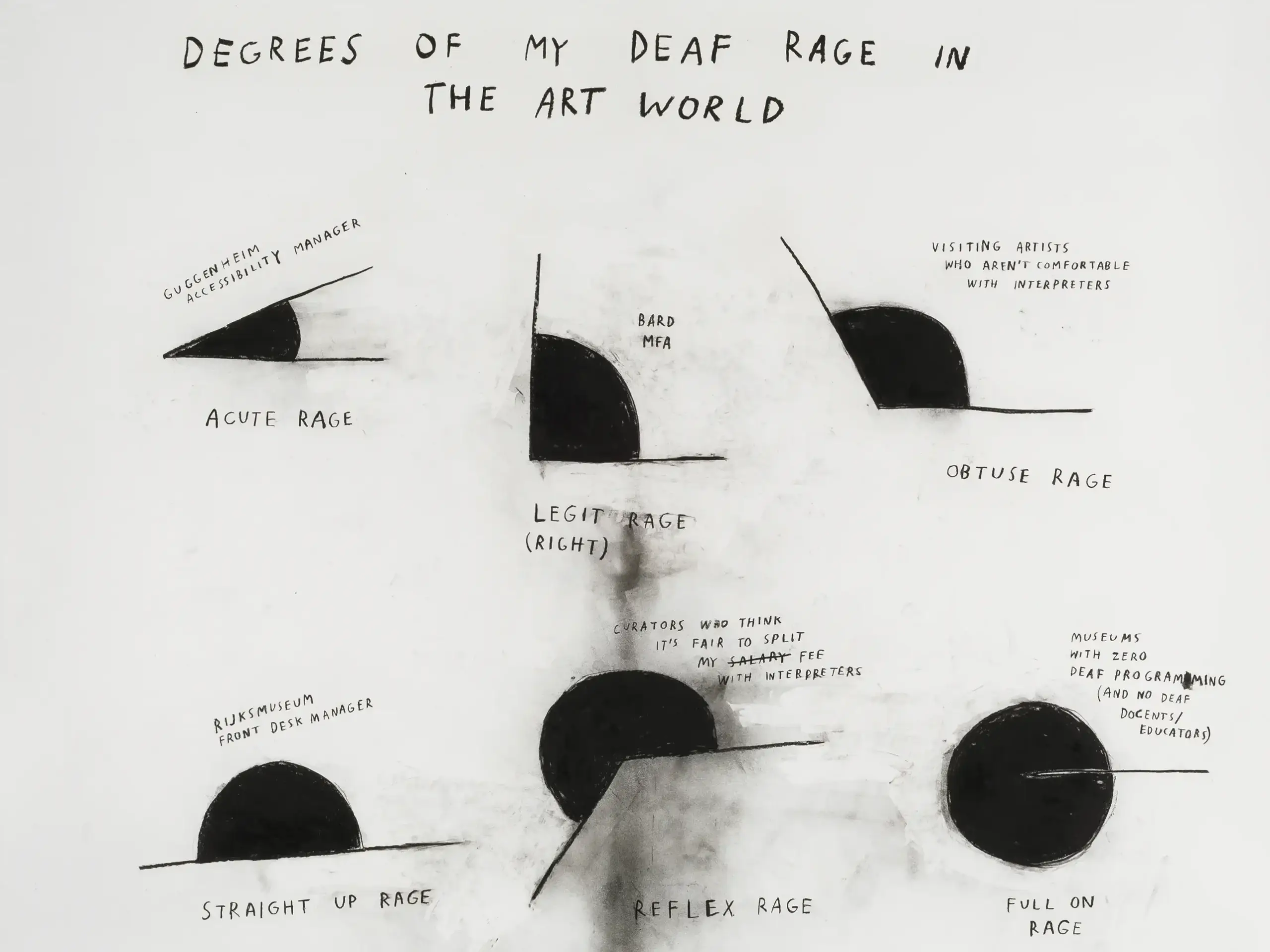
Photo: Degrees of My Deaf Rage in the Art World, 2018, by Christine Sun Kim, featured in dis_place’s exhibition ‘I Need to be More Than a Lesson You Learned’
Among the artists featured in the exhibition is Christine Sun Kim, whose drawing Degrees of My Deaf Rage in the Art World is composed of short statements drawn from her experiences navigating art and cultural institutions.
"Curators who think it's fair to split my salary fee with interpreters."
"Museums with zero deaf programming (and no deaf docents/educators)."
Each statement is accompanied by a simple geometric form charting the degree of her rage felt in those moments. Together, the drawings transform individual experiences into a visual record of a much larger pattern. Her work serves as a catalogue of the accumulated frustration that has emerged across years of working within institutions whose structures rarely put Deaf perspectives at the center – or even consider them at all.
The drawing doesn’t offer solutions. It doesn’t need to.
By naming and documenting these experiences, it makes visible what can otherwise remain diffuse and easy to overlook: the cumulative effects of systems that repeatedly ask disabled artists to adapt to environments that were never designed with them in mind. Her depiction of these microaggressions demonstrates the exhausting nature of these barriers and the very real rage that emerges when those experiences are compounded.
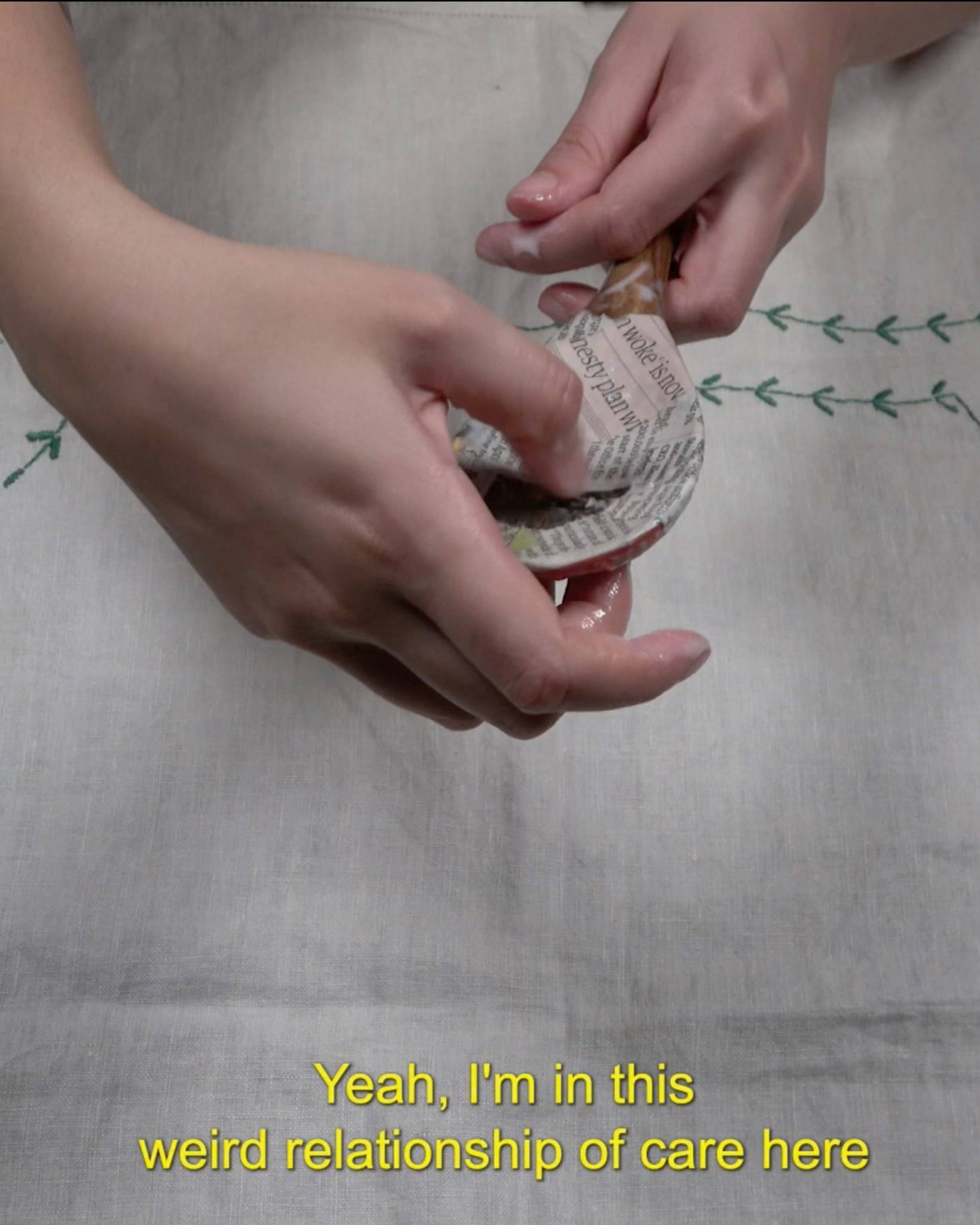
Photo: Spoons (After Carolyn Lazard), 2023, a film by Jamila Prowse.
Across the nine artists’ works, the exhibition evokes a series of questions. Who gets to participate in defining cultural institutions? Whose knowledge is recognized? How does lived experience inform the environments where art is created, presented, and experienced?
dis_place offers one possible answer. Accessibility is built into the platform itself, while disabled artists and disabled leadership help define its direction from the outset. ‘I Need to Be More Than a Lesson You Learned’ is an exhibition title that feels both like a valid critique and an invitation to the art world and to society at large.
The work of making art more accessible is, at its heart, an affirmation that this experience belongs to all of us.
Art has always been one of the ways people understand themselves, one another, and the world around them.
Cultural institutions have the opportunity — and the responsibility — to make that experience available as broadly as possible. That work begins by recognizing there is no single way to move through the world, engage with art, or participate in cultural life.
But it also asks something more fundamental: whose lived experience is treated as expertise while those institutions are still being imagined and shaped. Expanding access is not only about removing barriers after they appear. It is about ensuring that the people who know those barriers most intimately have a meaningful voice in designing the spaces, systems, and conversations from the very beginning.
In doing so, we honor the vital role art and creative expression have always played in all human life.
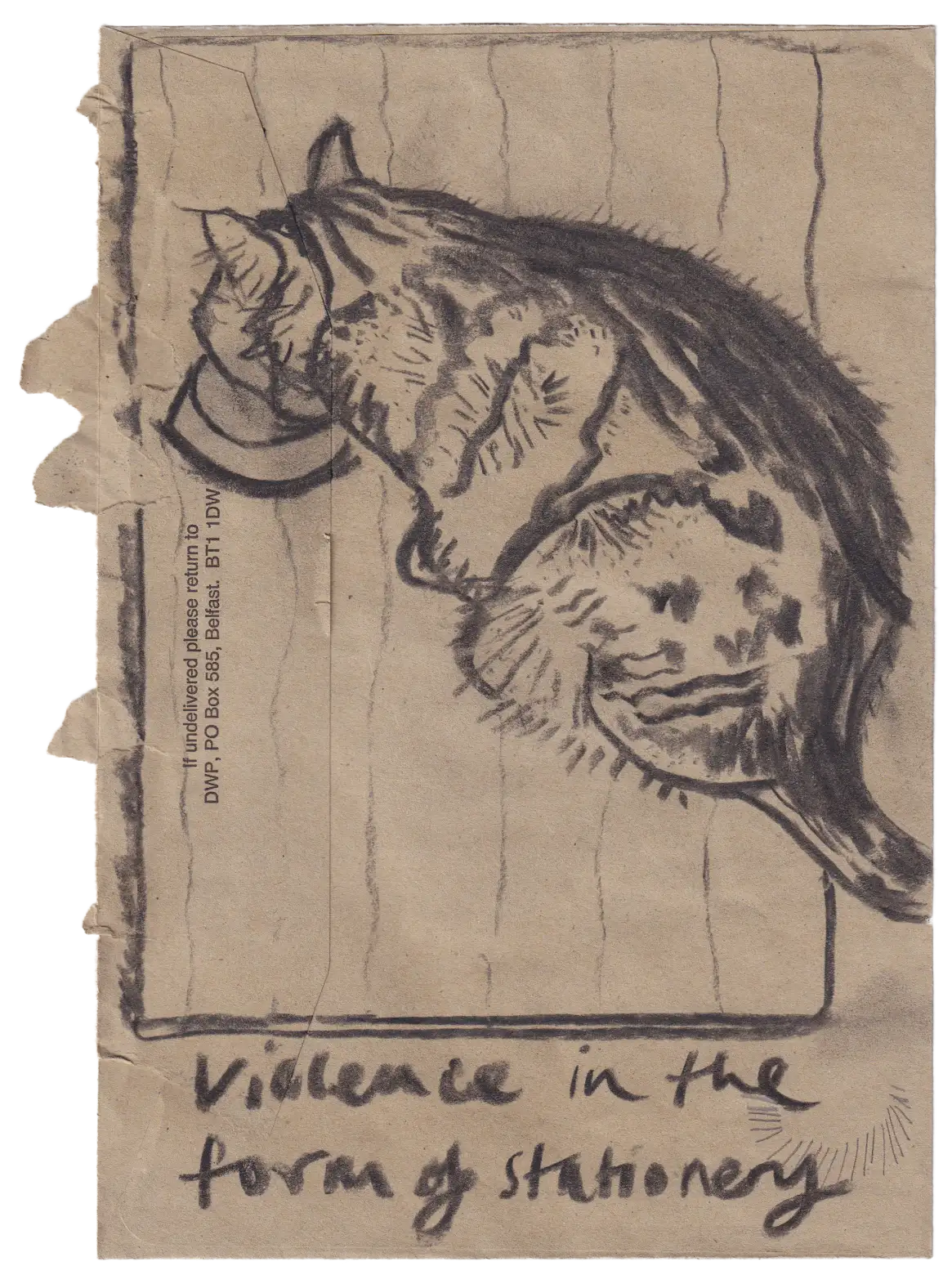
Photo: Violence in the form of stationery (pt. 1), 2018 by Bella Milroy, featured in dis_place’s exhibition ‘I Need to be More Than a Lesson You Learned’
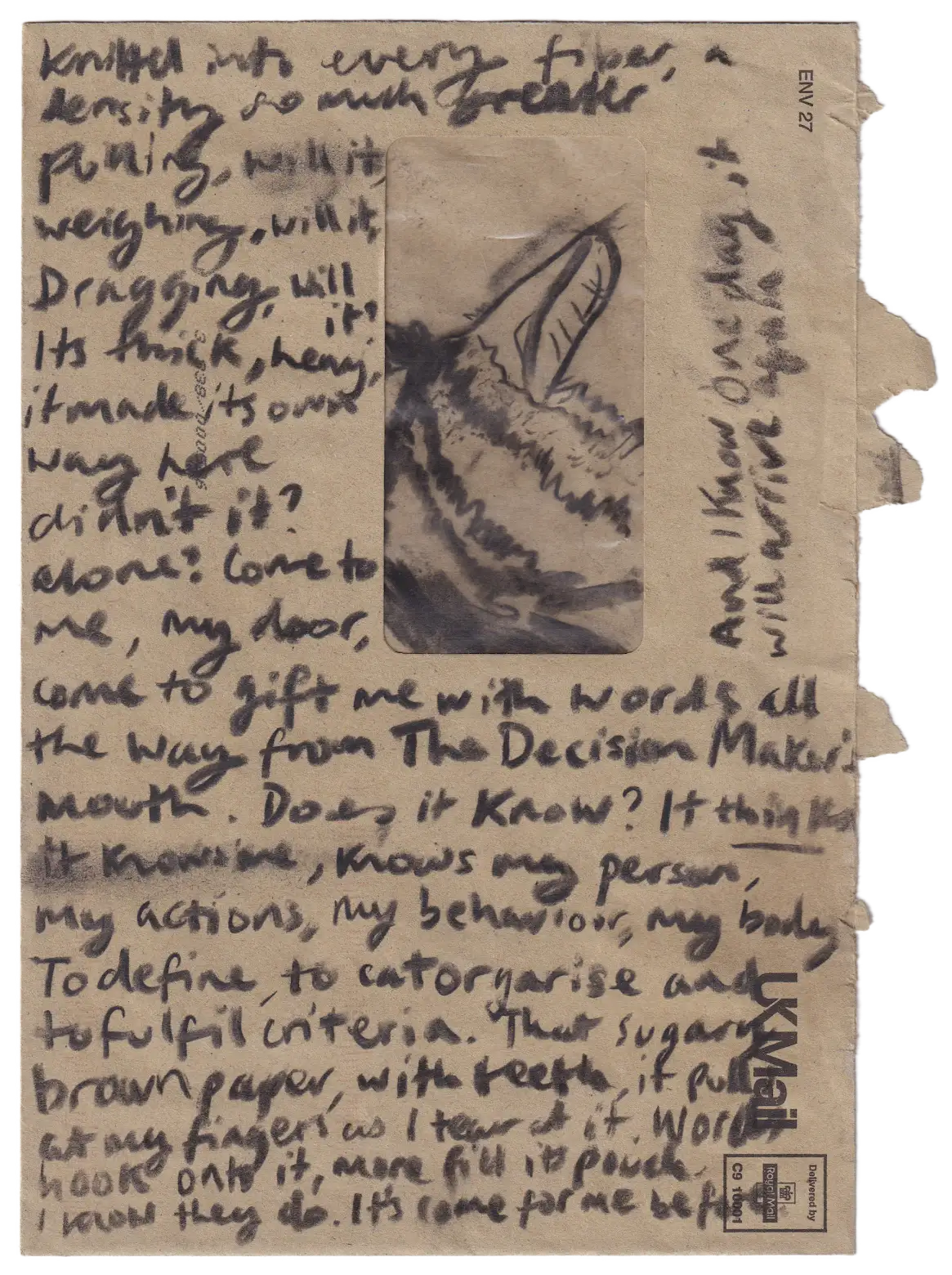
Photo: Violence in the form of stationery (pt. 2), 2018 by Bella Milroy, featured in dis_place’s exhibition ‘I Need to be More Than a Lesson You Learned’
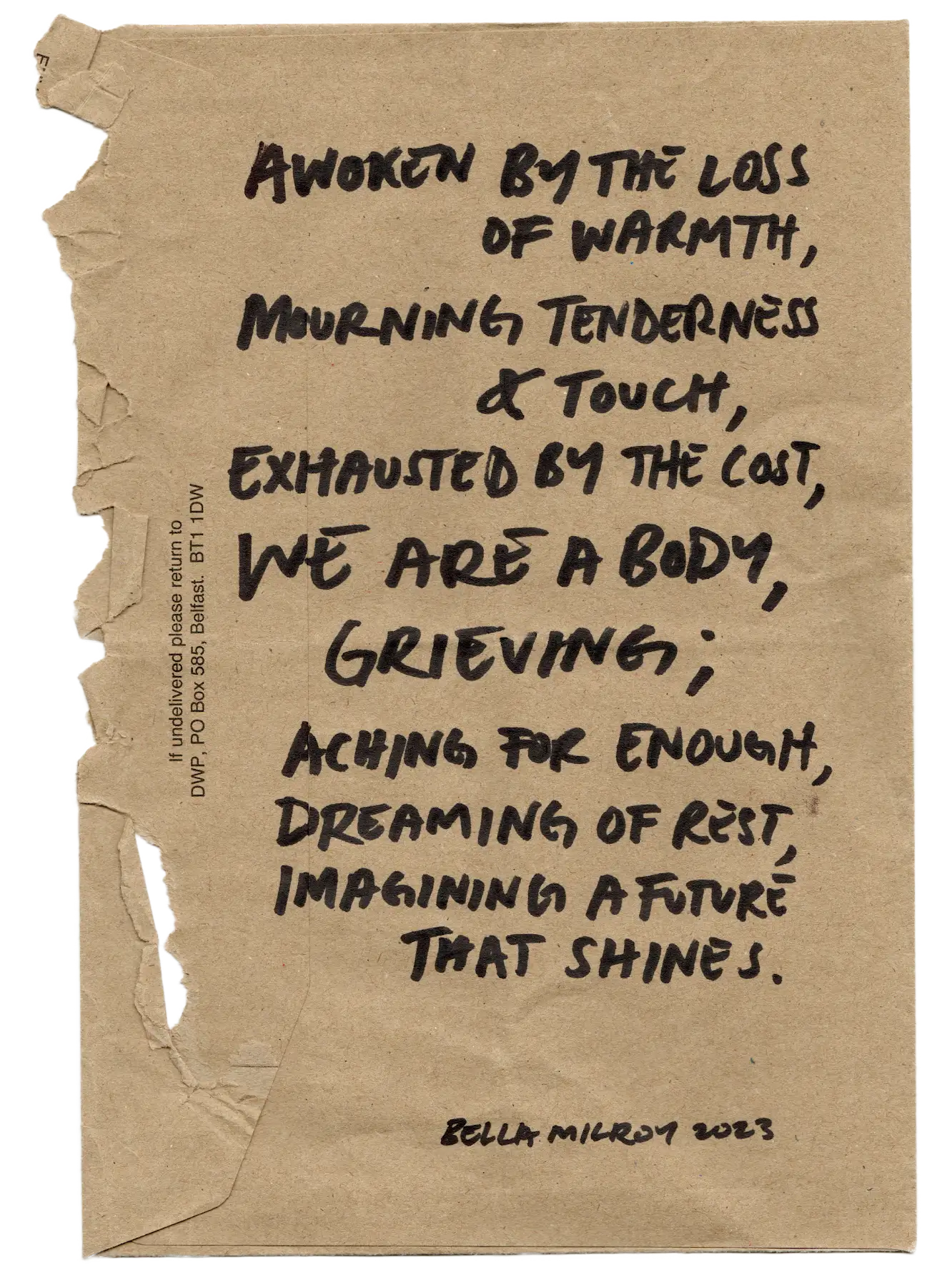
Photo: It feels like this, 2023 by Bella Milroy, featured in dis_place’s exhibition ‘I Need to be More Than a Lesson You Learned’
The questions this exhibition asks apply to us, too. Bellforge is still taking shape — not only as a campus, but as an institution — and the work of building access from the start is ours to do, not just to write about. Some of it is already happening on the grounds, like Balance in Nature: Voice Colors Yoga, an adaptive outdoor yoga class designed for autistic students and those with related special needs, led by a specialist instructor. And as the renovation of Lee Chapel and the Infirmary moves forward, we’re committed to bringing people with lived experience into those decisions while they’re still being made — not after the doors open.
If you’re curious about the vision guiding that work, we invite you to explore the future of Bellforge.